
Author: vpeacock9680ac1d9b
-
3/3 Publication Day
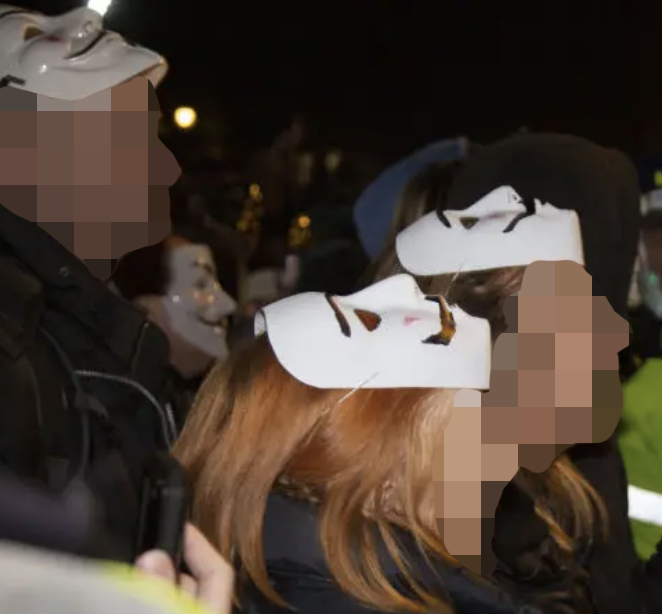
Screenshot In the early studies initiation was viewed in explicitly evolutionary terms. While James Frazer saw initiation as ‘the central mystery of primitive society’, he also believed that it would ultimately be superseded by modern science and disappear altogether.[1] Even in the 1950s, this prediction persists in the work of Mircea Eliade, who stated that in places such as Britain the institution was ‘practically nonexistent’.[2] Behind these predictions lay not only the brutal cultural hierarchy of evolutionism, rendered ideologically self-evident by the technological dominance of the northern empires, but the notion that initiation was an exclusively religious phenomenon that would have no place in societies governed by scientific rationalism. The case of AnonUK profoundly contradicts the future that Frazer and Eliade anticipated. While the truth claims of scientific rationalism are more powerful than ever, here they are unmoored from its forms of social organisation and its methods, and overlay a phenomenon that resembles a form of secularised religion. Moreover, initiatory processes have not disappeared with the advent of modern technologies, but in fact have changed and even possibly expanded with and through them.
Digital Initiation Rites, (2025, p. 25).
[1] Cited in La Fontaine (1985, 20).
[2] Eliade (1995, ix).
-
2/3 Digital Initiation
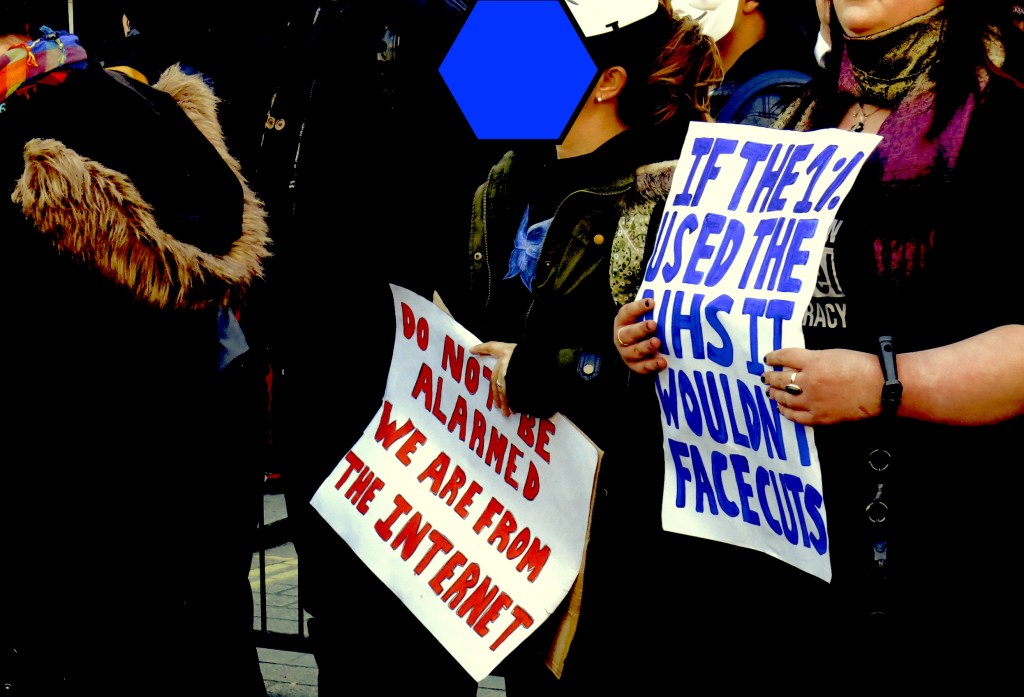
digital initiation rite (n.) Ritual sequence of biographical change comparable to an initiation rite, in which digital communication and information technologies play a substantive role in part of the sequence.
The concept of digital initiation carries this ancient sequence of epistemic transformation into twenty-first century forms of mediation. While acknowledging two conditions that make each of these rites irreducibly singular—the individuation of social crisis, and the personalization of online experience—they possess a broad outline of events. Digital initiands experience some form of unsettling invisibility, relative to a nexus of relationships in which they are embedded, during which they immerse themselves in a series of audiovisual experiences online through which they learn to theorise it. At an unspecified point, these digital journeys transport them to new social actors who share similar theories of the world, and the forging of these new relationships also serves to reconstitute their existing ones, making a break with the past. Beyond any social choreography, a digital initiation rite is a complex process that dismantles van Gennep (and Turner’s) neat tripartite scheme.
Digital Initiation Rites (2025, p.11).
-
Countdown to publication of Digital Initiation Rites (1/3)
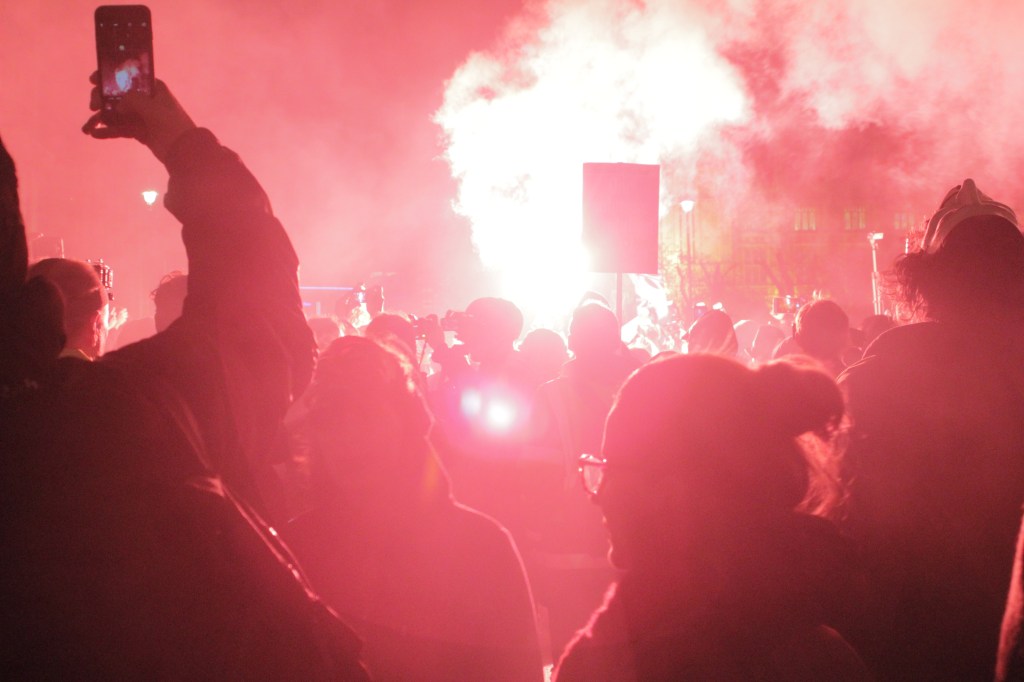
Today I inaugurate a ten-part process of sharing snippets from my forthcoming monograph, Digital Initiation Rites, alongside fieldwork images, in anticipation of its publication by Cornell University Press, on 15th December 2025.
1/3 Bonfire Night
It is November 5th, 2014, a date known annually as ‘Guy Fawkes Night’ or ‘Bonfire Night’. Nominally, it is a celebration of the foiling of a Catholic plot in 1605 to assassinate the English king and destroy the Houses of Parliament, marking the day when one of the plot’s leading architects, Guido or ‘Guy’ Fawkes, was discovered beneath it with thirty-six barrels of gunpowder and a match. Yet throughout its four-century plus history, this ritual has come to stand for contradictory things. Despite being originally instituted as a ceremony of remembrance to reinforce the Protestant hegemony, it soon took on a lively and distinct folk existence of its own, emerging as an evening for drinking, feasting, and the lighting of fires.[1] In this subaltern life, Bonfire Night evolved into an occasion for licentious behaviour and score-settling, with vengeances falling along segmentary lines that often possessed an economic character. Punitive landlords had their fences removed and burned, unpopular employers had stones thrown at their homes.[2] During the particularly riotous years that followed the French Revolution, these altercations coalesced into the emergence of the ‘Bonfire Boys’—groups of young male artisans, labourers, and craftspeople, who blackened their faces with soot, or covered their heads with cloth, and roved the streets throwing hand held fireworks and transgressing moral codes, in what was also called ‘Mischief Night’.[3]
Digital Initiation Rites (2025, p. 4-5)
[1] On this folk history see Cressy (1989, 1992).
[2] See Cressy (1992) and Hutton (1996), on practices of fence-stealing in the eighteenth and nineteenth century. On the latter, Hutton documents that, ‘On 5 November 1828 a masked crowd threw stones and fireworks at the house of an unpopular employer at Luton’ (1996, 399).
[3] Cited in Hutton (1996, 382). The ‘Bonfire Boys’ remain an enduring institution in Britain’s largest bonfire night festival in the town of Lewes, though much of former rule-breaking character of the Bonfire Boys has been contained through its institutionalisation (Etherington 2001).
 Vita Peacock