
Digital Initiation Rites
“This is a timely and profound neo-Anthropological work in which the human leaps forth from the virtual and back again. It gives new life to notions of tribe and the personal transformation exercised in realms betwixt and between the digital as experienced with initiation into the diffuse sociopolitical grouping of Anonymous in the UK.”
Michael Taussig, Columbia University
Published by Cornell University Press
About the book
Digital Initiation Rites is an ethnography of Anonymous in Britain between 2014 and 2017, in the context of government austerity. Drawing on testimonies of dozens of participants, for whom digital technologies enabled and articulated a political transformation from being “asleep” to being “awake,” Vita Peacock narrates the process through which these technologies have become implicated in profound subjective changes. The book joins a wider return of the comparative method in anthropology by placing these accounts in direct conversation with studies of traditional initiation rites—ritual sequences of symbolic death and rebirth—that charge the initiand with knowledge about a society to produce a moral responsibility for it. Through this juxtaposition, Peacock conceptualizes the historically novel form of digital initiation rites, in which digital communication and information technologies play a substantive role in these sequences. Digital Initiation Rites presents another angle to contemporary debates around “conspiracy theorizing” and shows how the consumption of digital media connects to the deep history of humankind.

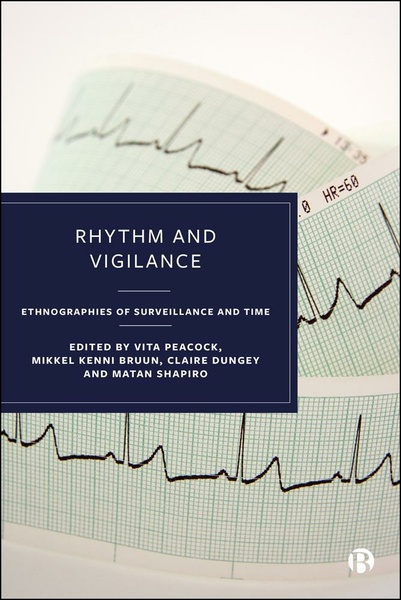
Rhythm and Vigilance
“This innovative edited collection is a masterful exploration in the role of ethnography in comprehending the intersection between rhythms of life, temporal opacity and digital surveillance in contemporary life.”
Atreyee Sen, University of Copenhagen
Published by Bristol University Press
About the book
Studies of surveillance have emphasised how technology is used to control space. This innovative collection examines how new monitoring technologies are also affecting the experience of time.
Drawing on Henri Lefebvre’s concept of rhythm, the book brings together ethnographic research from Europe, China and the US, to show how digital monitoring is transforming spatio-temporal relations across the Global North.
As digital technologies continue to reshape the rhythms of life, this book makes a valuable contribution to both anthropology and surveillance studies.

 Vita Peacock